AMCOL MARITIME TIMES | ประจำวันที่ 26 พฤศจิกายน 2569

อุตสาหกรรมพาณิชยนาวีโลกกำลังเผชิญความเปลี่ยนแปลงจากนโยบายการค้าระหว่างประเทศ ความผันผวนของตลาดค่าระวางเรือ การแข่งขันด้านโครงสร้างพื้นฐานทางทะเล และความเสี่ยงด้านภูมิรัฐศาสตร์ที่ส่งผลต่อเศรษฐกิจและห่วงโซ่อุปทานโลก

ประเด็นสำคัญที่ต้องติดตาม

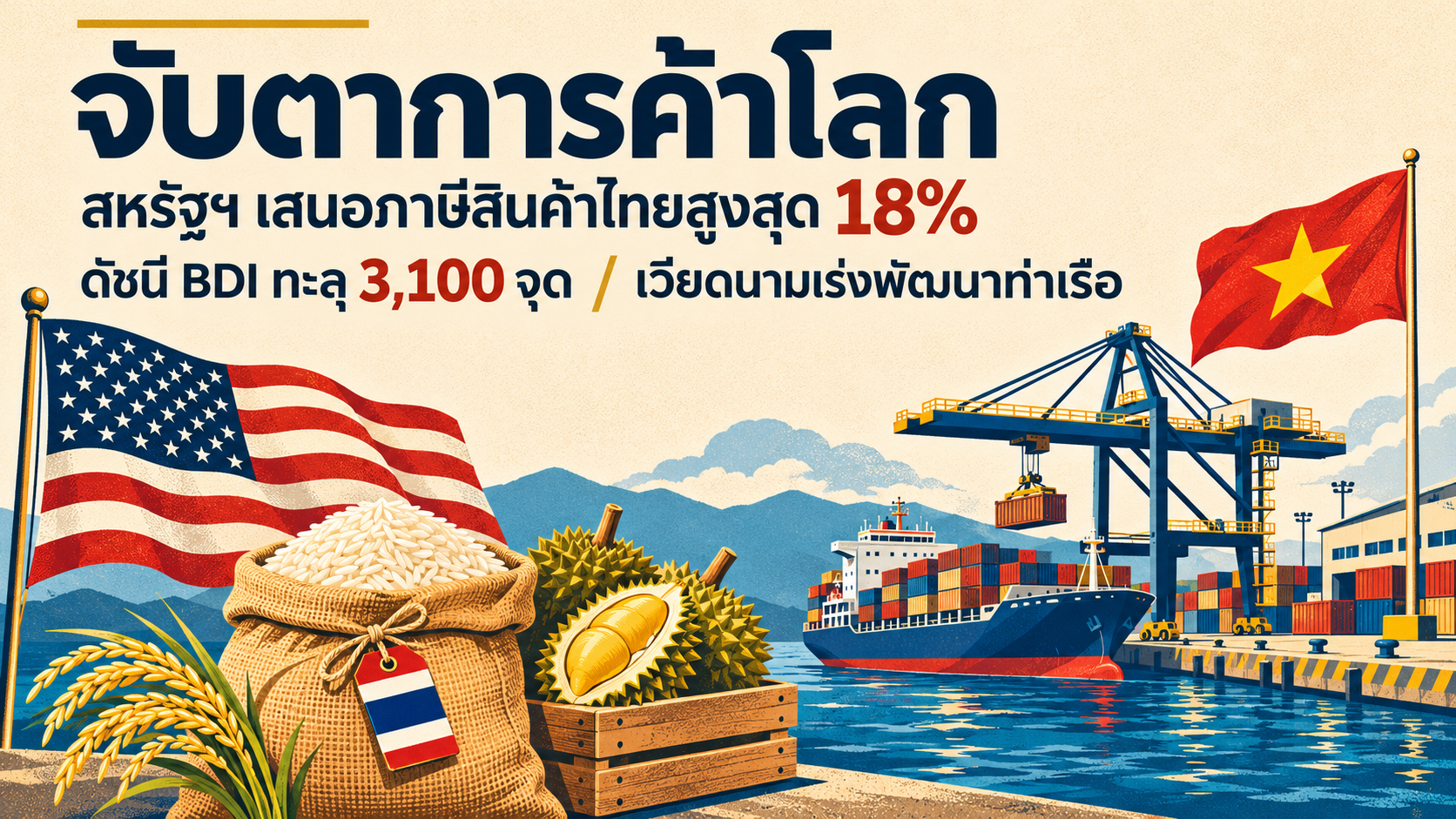
- การค้าโลก: สหรัฐฯ เสนอพิจารณามาตรการภาษีภายใต้ Section 301 ครอบคลุม 14 เขตเศรษฐกิจ รวมถึงประเทศไทยในอัตราสูงสุด 18% ซึ่งอาจส่งผลต่อการส่งออกและเส้นทางขนส่งสินค้าระหว่างเอเชียกับสหรัฐฯ ทั้งนี้ มาตรการดังกล่าวยังเป็นข้อเสนอและไม่มีผลบังคับใช้
- ตลาดค่าระวางเรือ: ดัชนี Baltic Dry Index (BDI) ปรับตัวเพิ่มขึ้นต่อเนื่องเป็นวันที่สาม แตะระดับ 3,107 จุด ขณะที่ดัชนีค่าระวางตู้สินค้าระดับโลก (WCI) ลดลง 3% สะท้อนทิศทางตลาดขนส่งทางทะเลที่แตกต่างกัน
- การแข่งขันท่าเรืออาเซียน: เวียดนามเดินหน้าพัฒนาโครงการท่าเรือไฮฟอง ตั้งเป้ารองรับตู้สินค้า 4.7 ล้าน TEU ต่อปี เป็นประเด็นสำคัญที่ประเทศไทยควรติดตามควบคู่กับการพัฒนาท่าเรือแหลมฉบังระยะที่ 3
- ความปลอดภัยทางทะเล: องค์การทางทะเลระหว่างประเทศ (IMO) เน้นย้ำการแก้ไขปัญหาการปลอมแปลงทะเบียนเรือ ขณะที่ความเสี่ยงบริเวณช่องแคบฮอร์มุซยังเป็นปัจจัยสำคัญต่อการเดินเรือ การขนส่งพลังงาน และความปลอดภัยของคนประจำเรือ
- ธุรกิจเดินเรือ: PSL ทำสัญญาให้เช่าเรือ Sarita Naree ระยะเวลา 11–13 เดือน โดยกำหนดอัตราค่าเชื่อมโยงกับดัชนีตลาดค่าระวางเรือ

มุมมอง AMCOL Research

ผู้ประกอบการพาณิชยนาวีจำเป็นต้องติดตามนโยบายการค้า ประเมินความเสี่ยงด้านภูมิรัฐศาสตร์ บริหารต้นทุนพลังงาน และให้ความสำคัญกับมาตรฐานความปลอดภัย เพื่อเสริมสร้างขีดความสามารถในการแข่งขันและรองรับความเปลี่ยนแปลงของอุตสาหกรรมทางทะเลอย่างยั่งยืน

ติดตามข่าวสารและบทวิเคราะห์อุตสาหกรรมพาณิชยนาวีได้ใน AMCOL MARITIME TIMES ทั้งฉบับภาษาไทยและภาษาอังกฤษ

จัดทำโดย: ศูนย์วิจัยและพัฒนา วิทยาลัยเทคโนโลยีทางทะเลแห่งเอเชีย (AMCOL Research & Development Center)

#AMCOL #AMCOLMaritimeTimes #MaritimeIntelligence #MaritimeNews #ShippingBusiness #GlobalTrade #MaritimeEconomy #Logistics #พาณิชยนาวี #เศรษฐกิจทางทะเล #ข่าวสารทางทะเล


Global Trade in Focus: US Proposes Tariffs of Up to 18% on Thai Goods, BDI Exceeds 3,100, and Vietnam Advances Port Development

AMCOL MARITIME TIMES | 26 November 2026

The global maritime industry faces evolving challenges arising from international trade policies, freight market volatility, port infrastructure competition, and geopolitical risks affecting global supply chains and economic stability.

Key Maritime Developments

- Global Trade: The United States has proposed Section 301 tariff measures covering 14 economies, including potential tariffs of up to 18% on Thai goods. The proposed measures are not yet in force.
- Freight Markets: The Baltic Dry Index (BDI) reached 3,107 points following three consecutive sessions of gains, while the World Container Index (WCI) declined by 3% week on week.
- ASEAN Port Development: Vietnam is advancing its Hai Phong terminal project, targeting an annual capacity of 4.7 million TEU, highlighting the importance of monitoring regional competition alongside Thailand’s Laem Chabang Phase 3 development.
- Maritime Safety and Security: The IMO has emphasized the need to combat fraudulent ship registries, while geopolitical risks in the Strait of Hormuz remain a significant concern for shipping, energy transportation, and seafarer safety.
- Shipping Business: PSL has secured an 11–13 month index-linked charter for the Ultramax vessel Sarita Naree.

AMCOL Research Perspective

Maritime stakeholders must closely monitor trade policies, geopolitical developments, energy costs, and regulatory compliance to strengthen operational resilience and maintain long-term competitiveness.

Explore the latest maritime news and industry insights in AMCOL MARITIME TIMES, available in both Thai and English editions.

Published by: AMCOL Research & Development Center, Asian Maritime Technological College.

#AMCOL #AMCOLMaritimeTimes #MaritimeIntelligence #MaritimeNews #ShippingBusiness #GlobalTrade #MaritimeEconomy #PortDevelopment #MaritimeSafety #SupplyChain
ข่าวสาร